Learning Outcome 7
Investigate learning from a micro-level perspective in support of small group and/or individual student learning.
Throughout my practicum, I developed a deeper understanding of student learning by examining it at a micro-level, focusing on individual students and small groups to better identify strengths, needs, and next steps. This close observation allowed me to move beyond whole-class instruction and engage in more intentional, responsive teaching practices that supported differentiated learning.
One of the most impactful experiences in developing this understanding was facilitating and analyzing a variety of mathematics diagnostic assessments. One of which was focused on multiplication strategies where students were asked to interpret visual arrays and demonstrate their thinking using a variety of approaches, such as skip counting, repeated addition, or grouping. As I reviewed student work and assisted in marking, I noticed significant variation in how students approached the task. Some demonstrated strong conceptual understanding, while others relied on less efficient strategies or showed gaps in foundational knowledge. This experience allowed me to identify specific learning needs and recognize the importance of tailoring instruction to support diverse learners.
During my teaching block, I deepened my understanding of student learning at a micro-level by incorporating the triangulation of assessment into my practice. With support from my mentor teacher, I learned to gather evidence through observations, conversations, and student products in order to develop a more complete understanding of where each student was in the unit. This approach allowed me to more accurately identify individual strengths, gaps in understanding, and next steps for learning. One particular challenge occurred during a week when several students were absent, which required me to be more intentional in tracking student progress. I used tools such as exit tickets and Scratch coding submissions to assess student understanding and monitor their development within the unit. These forms of assessment allowed me to observe how students were applying coding concepts, identify misconceptions, and determine which students required additional support or extension.
Using this information, I was able to adjust my instruction to better meet the needs of my students, providing targeted support for those who were struggling while ensuring that all students were working toward a clear understanding of the content. My goal was to support each student in achieving success to the best of their ability, and this experience reinforced the importance of ongoing, varied assessment in guiding instruction. Moving forward, I will continue to use triangulated assessment practices to inform my teaching and ensure that all students are supported in their learning.
My work in the learning commons also contributed to my understanding of micro-level learning. While facilitating literacy and STEM activities with primary students, I observed how individual students engaged with tasks differently. For example, during hands-on coding activities using robotics, some students required structured guidance to navigate the task, while others independently explored and experimented. By observing these differences, I was able to adjust my level of support, offering prompts, modeling, or encouragement as needed. This highlighted the importance of flexibility and attentiveness when working with diverse learners.
Through these experiences, I engaged in ongoing inquiry into how students learn, using observation, assessment, and reflection to guide my practice. I documented these insights through my lesson planning and reflections, allowing me to track student progress and refine my instructional strategies.
This learning outcome has significantly influenced my approach to teaching. I have come to understand that effective instruction requires close attention to individual learners and a willingness to adapt based on their needs. Moving forward, I will continue to prioritize formative assessment, small group instruction, and differentiated strategies to support all students. I am committed to creating learning environments where each student is seen, supported, and challenged appropriately.
Overall, my practicum experience has strengthened my ability to investigate learning at a micro-level and has reinforced the importance of responsive, student-centered teaching practices.

Sample of multiplication diagnostic assessment.

Supporting students with multiplications strategies in small group settings.


Coding long term assessment tracker
Grade 4 Coding Anecdotals
Grade 5 Coding Anecdotals


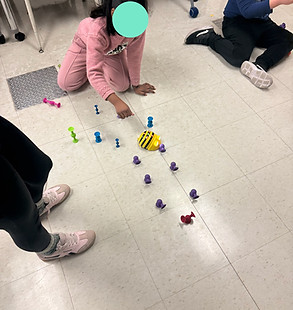
Cross-Curricular Literacy and Coding Lesson for grades 1-3

